Adaptive Simulation Platform
Stress-test system behavior under configurable load, latency, and failure conditions before production.
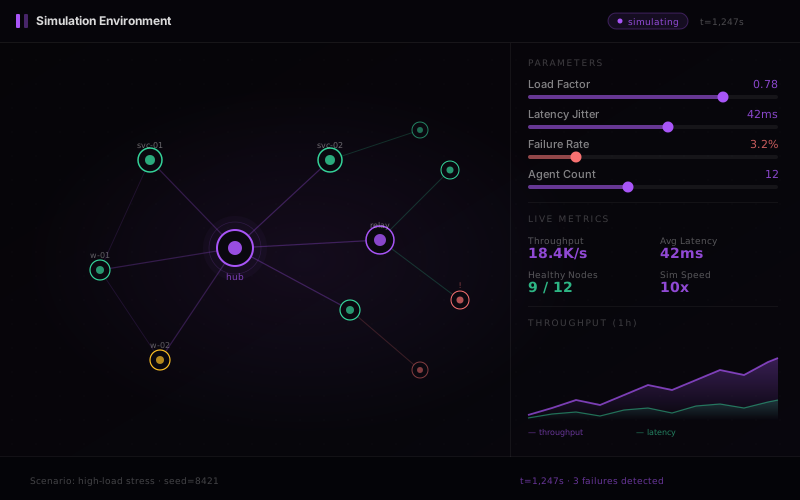
A real-time simulation environment for modeling distributed topologies, applying control policies, and observing emergent system behavior under pressure.
Problem Space
Production environments are too costly and fragile for exploratory testing. Teams cannot safely model burst traffic, partial outages, or the cascading effects of policy changes without risking real services.
System Design
A real-time simulation environment with configurable topology, pluggable control policies, and live metric visualization. Teams stress-test system behavior under varying load, latency, and failure conditions.
System Components
Live Prototype
Interactive prototype — all data generated client-side with deterministic seeds.
Reference Performance
Reference benchmark: burst_traffic scenario, autoscale policy, seeded RNG. 12 agents at baseline scaling to 512 at peak. Measured tick duration and policy convergence over 60s window.
Deterministic seed · 60s window · Simulated workload · Local environment